Teej Festival – The Joyful Monsoon Celebration of Devotion, Tradition & Womanhood
The Teej Festival is one of Jaipur’s most enchanting celebrations, marking the arrival of the monsoon and honoring the divine union of Goddess Parvati and Lord Shiva. Rich in color, music, and devotion, Teej transforms the Pink City into a vibrant spectacle of traditional attire, folk performances, decorated swings, and joyful gatherings.
Women across Jaipur celebrate Teej with heartfelt devotion, praying for marital happiness, prosperity, and well-being. The festival’s charm lies in its blend of spiritual significance and cultural beauty — from mehendi rituals to festive songs that echo through the city’s historic lanes.
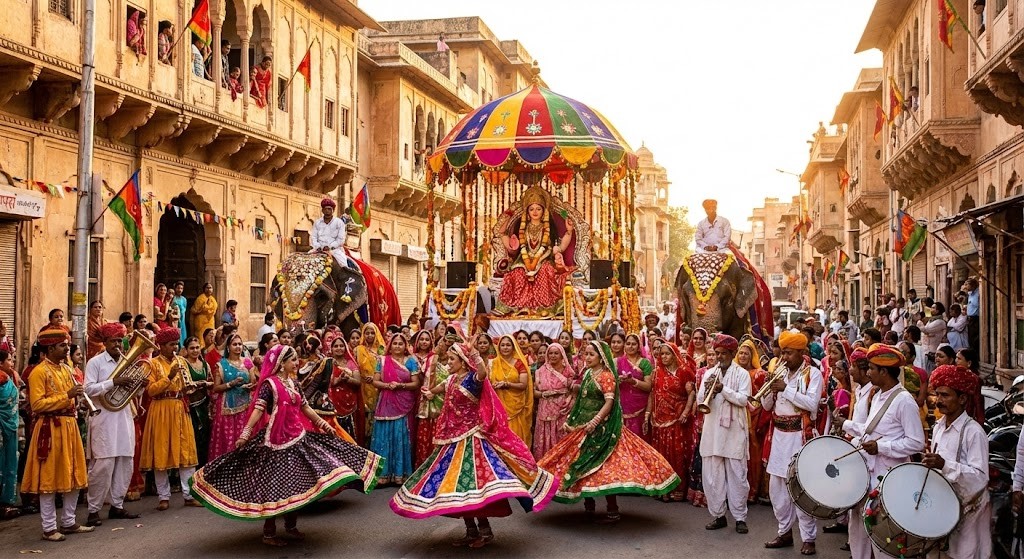
Jaipur’s Teej is especially famous for its grand royal procession, a centuries-old tradition that draws locals and tourists alike. This celebration not only honors ancient customs but also highlights the cultural pride and feminine grace deeply rooted in Rajasthan’s heritage.
🌿 The Legend and Cultural Legacy
Teej celebrates Goddess Parvati’s devotion, symbolizing love, strength, and the enduring commitment of married life. According to mythology, Parvati performed intense penance to reunite with Lord Shiva, and Teej commemorates their sacred bond.
In Jaipur, this legend comes alive through rituals, traditional songs, and vibrant community gatherings. The festival reflects the city’s timeless devotion and its rich legacy of celebrating womanhood and spiritual unity.
Women dress in shades of green and red, symbolizing fertility and auspiciousness. They adorn themselves with jewelry, apply mehendi, wear lehriya sarees, and participate in rituals passed down through generations.
🎊 The Teej Celebrations in Jaipur
The Teej Festival spans several days of lively rituals, colorful customs, and large cultural gatherings that bring the city together in celebration.
Major Highlights Include:
- Royal Teej Procession:
A magnificent parade from Tripolia Gate, featuring royal chariots, folk performers, horses, camels, and musicians. The idol of Goddess Parvati is carried with regal honor, accompanied by traditional dancers and drummers. - Jhula (Swings) Ceremonies:
Beautifully decorated swings are set up in homes and gardens. Women enjoy joyous swinging rituals while singing traditional Teej songs. - Mehendi Traditions:
Applying intricate mehendi patterns is an essential part of Teej, symbolizing love, celebration, and prosperity. - Festive Attire:
Women wear green sarees or lehengas, adorned with bangles, jewelry, and floral accessories — creating a picturesque monsoon celebration. - Street Performances & Folk Art:
Markets and public spaces host Rajasthani folk dances, puppet shows, and cultural programs that attract large crowds. - Teej Sweets:
Special monsoon delicacies like Ghewar, Feeni, and Malpua remain favorite festive treats across Jaipur.
Throughout the festival, Jaipur radiates happiness, devotion, and cultural unity — making Teej one of the city’s most heartwarming celebrations.
🌼 Spiritual and Cultural Significance
Teej symbolizes devotion, marital harmony, and the blessings of Goddess Parvati. Spiritually, it embodies hope, new beginnings, and the rejuvenating spirit of the monsoon.
Culturally, the festival strengthens social bonding among women, preserves traditional music and folk dances, and showcases Jaipur’s deep-rooted artistic heritage.
Teej also invites people to reconnect with community values, rituals, and ancient customs that continue to thrive in Rajasthan.
📅 Festival Details
Location: Tripolia Gate, Old City, Jaipur
Main Events: Teej Procession, Mehendi Rituals, Folk Performances
Duration: 2–3 Days
Best Time to Visit: Procession Evenings
Organized By: Department of Tourism & Jaipur Royal Family
⭐ Why You Should Visit
The Teej Festival in Jaipur is an unforgettable cultural experience — a beautiful fusion of devotion, tradition, and festive charm. The grand procession, colorful attire, folk music, and community celebrations create an atmosphere filled with joy and positivity.
Visiting Jaipur during Teej allows you to witness the city’s artistic beauty, its monsoon magic, and its heartfelt celebration of womanhood and devotion.
It is a festival that truly captures the emotional and cultural soul of Rajasthan.